|
|
1975
|
|
|
|
1975
|
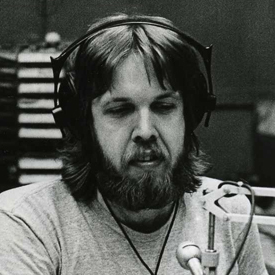
Like a lot of the mid 1970's to early 1980's jocks that wound up at WROV, Chuck Holloway (Holland) gravitated to Roanoke from Bedford — just up the road about halfway between Roanoke and Lynchburg, Virginia. On the air he was "The Chucker," but in the industry he was known as "The Ear," because of his uncanny ability to "hear" hits when auditioning new music for the WROV on air rotation.
After cutting his radio teeth at Bedford's WBLT, Chuck got what he called "…the gig of a lifetime" when he was hired to take on mornings at The Rock of Roanoke. Rich Randall, who arrived at WROV a year later and worked with and for Chuck through 1978, relates his impressions of Holloway when they met. "He was extremely kind and compassionate, which was a rarity in this business. As far as I could tell he had absolutely no ego whatsoever. Six feet or so of talent, ability, and skill wrapped up in warm fuzzy. And on him, it worked."
Chuck gave up the morning slot, which he never felt completely comfortable doing, to Rob O'Brady later in the year and moved to the evening shift of 7pm to midnight and the position of music director. A position that he was made for. Fate — and Bart Prater — gave him the opportunity, but it was his innate ability to spot a hit rock and roll radio song that gave him the nickname "The Ear" and his greatest enjoyment.
During his tenure as music director Chuck was responsible for getting WROV's play list reported in Radio & Records, a weekly radio music publication that didn't seem at the time to care what smaller cities in the American heartland were playing. By the time Chuck left WROV for greener career pastures the music industry was looking at Roanoke and WROV for those surprise hits that could — and did — make a difference to a major New York or Chicago station that was trying to beat their competition by being ahead of the Top 40 curve.
Holloway's real talent, however, was his lack of fear when unleashing new artists or different styles from existing artists. While auditioning the latest 45rpm releases from The Doobie Brothers and The Eagles, Holloway flipped the songs over to hear the "B" sides and heard "hit" on each. (Both happened over the summer and fall of 1974). The Doobie's "B" side "Black Water" became that bands first number one song. The Eagles "B" side, "Best of My Love" is still one of the most requested Eagles songs on radio. On the wall of Chuck's office hung the gold records of both, presented to Chuck and WROV.
Holloway was also a great believer in the unofficial "DJ farm system" that supplied the future radio stars to bigger and bigger markets. His "ear" extended to spotting potential talent among the wannabe's and radio groupies. When a young Pat Garrett was the Cave Spring High School News reporter on WROV, Holloway noticed Garrett's enthusiasm, determination and raw talent. With simple nudges and suggestions Chuck started Garrett on a radio career that spanned many stations over the years. And Garrett was only one of many that benefited from Holloway's mentoring throughout his career.
In 1976 Chuck got the call to take on the program directorship of WLVA radio in Lynchburg, VA. Like WROV, WLVA was the local long-lived radio station and was the most "pop" sounding in town, although they played CHR (contemporary artists like Elton John, Billy Joel and the like) instead of the heavier rock of the day. Holloway made two decisions his first year that would give WLVA it's best ratings in decades.
The music category was broadened, utilizing "The Ear," and included unknown artists that were just breaking onto the CHR scene. More gold records were on the way for being among the first to add the likes of Boz Scaggs, Leo Sayer, and many others. While the gold records were nice, the audience began to increase as word spread about these new artists and songs on "the radio."
Holloway's second decision was also due to his "ear's" uncanny ability to hear what others hadn't. He hired former WROV jock Rich Randall, who was then working at Mutual (MBS) in Washington, D.C., and teamed him up with news director and morning news anchor Al Augustine. The two clicked immediately with each other and with the Lynchburg audience. By putting the two together, and hiring young up-and-coming talents like Johnny Quinn and Candy Clark (Bedford native Candace Hensley formerly of WVWR — not the "American Graffiti" actress), Holloway had created one of the first "ensemble" morning shows outside of a major market — and unique in the fact that except for Rich and Al the rest of the voices were all prerecorded on tape, using a Holloway inspired system of "scripted dead-roll" recording of bits.
The "Rich-n-Al" show, with lots of vocal and writing help from Quinn, Clark and Holloway, hit a high point in 1977 with a 33 share in the fall Arbitron ratings (unheard of for a low power AM in those years…with the exception, of course, of WROV). A little known — or remembered — fact from that rating book is that in 1977 Lynchburg and Roanoke were considered the same market, and stations from both cities were in ratings competition. Between WROV and WLVA, a total share of 68 was posted for the 6am - 9am and 3pm - 6pm (Holloway's and Prater's shift) dayparts. That left 32 to be broken up between the other 12 or so radio stations…including the powerful FM's. The WROV and WLVA combined power output was a measly 6,000 watts. WROV was 1,000 watts and WLVA was 5,000. And you couldn't hear either outside of its own city!
Industry recognition of Chuck's talents and abilities came at the Billboard Broadcasting Awards ceremony in Toronto, Canada, when the "Rich-n-Al Show" received the Eastern U.S. Region, small market "Broadcaster of the Year" award, and Chuck Holloway and WLVA won the Eastern U.S. Region small market "Radio Station of the Year" award.
In the early 1980s, Holloway left WLVA and took on the Music Director duties at WKZL-FM in Winston-Salem, NC where he later hired former Roanoker and WROV alumnus Steve Finnegan. The Chucker "hung up his cans" in 2000 because of health problems. Not long afterward, he passed away. He is sadly missed by family, friends, and his fellow broadcasters.
—Rich Randall, 2006